Show what connects the work
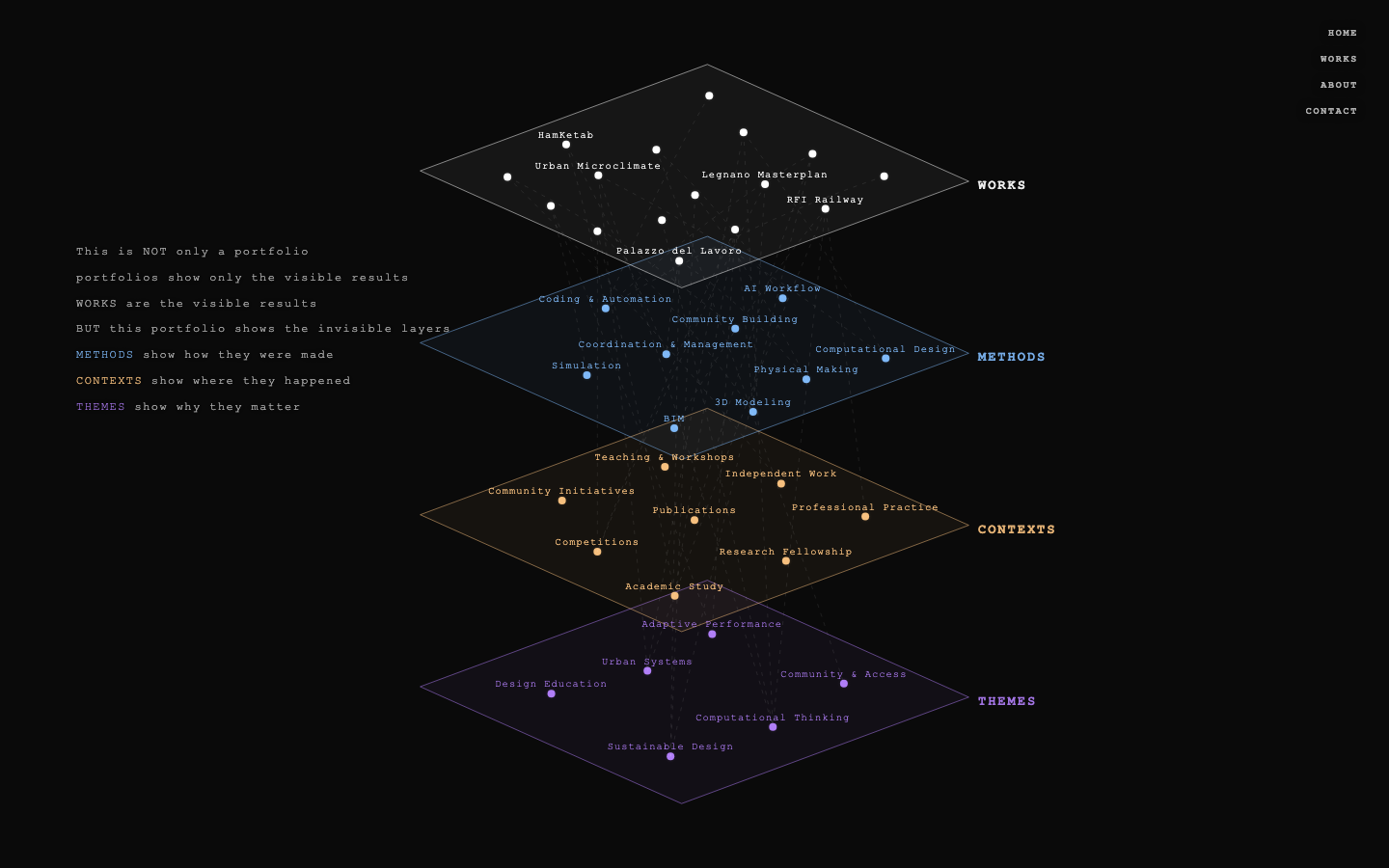
Alongside finished projects, the map shows the tools, methods, themes, lessons, and difficulties linking them.
Work
An AI-assisted interactive portfolio built as a knowledge graph, connecting finished work with its methods, contexts, themes, decisions, and the different parts of a layered practice.
Stage
The interactive website uses a knowledge graph to connect each project with its methods, contexts, and themes. It combines scroll-based storytelling, Stage and Backstage views, and AI-assisted production.
Alongside finished projects, the map shows the tools, methods, themes, lessons, and difficulties linking them.
A scroll-based introduction leads to the knowledge graph. Individual project pages then separate the visible result from the process behind it.
TypeScript holds the content, Canvas 2D draws the map, scrolling drives the opening sequence, and AI supports parts of the writing and code production.
The website also appears as a work node with its own methods, decisions, and Backstage story.
Backstage
I used AI to help write and build a portfolio about honest self-representation. That contradiction became part of the project instead of something to hide.
GitHub Copilot wrote most of the code, and AI helped draft project descriptions before I edited them. I kept asking when the website represented me and when it represented what the tools expected from a portfolio.
The Stage and Backstage structure made me compare what actually happened with what usually gets shown. Writing the Backstage sections exposed how much professional representation normally removes.
Once I organized the work as connections instead of a list, I noticed tools appearing across different contexts and themes joining projects I had considered unrelated.
A portfolio is not only a record of work. It also argues for a version of its author. This website makes that argument explicit and leaves the tension visible.