Two long corridors
The assignments covered roughly 33 km around Venezia and 19 km in Sicily. At that scale, manual modeling and repeated sheet updates were not practical.
Work
Revit and Dynamo workflow developed with LSB for two railway corridors, using changing DWG inputs to produce terrain models, tree placement, technical sheets, and IFC outputs across 33 km and 19 km assignments.
Stage
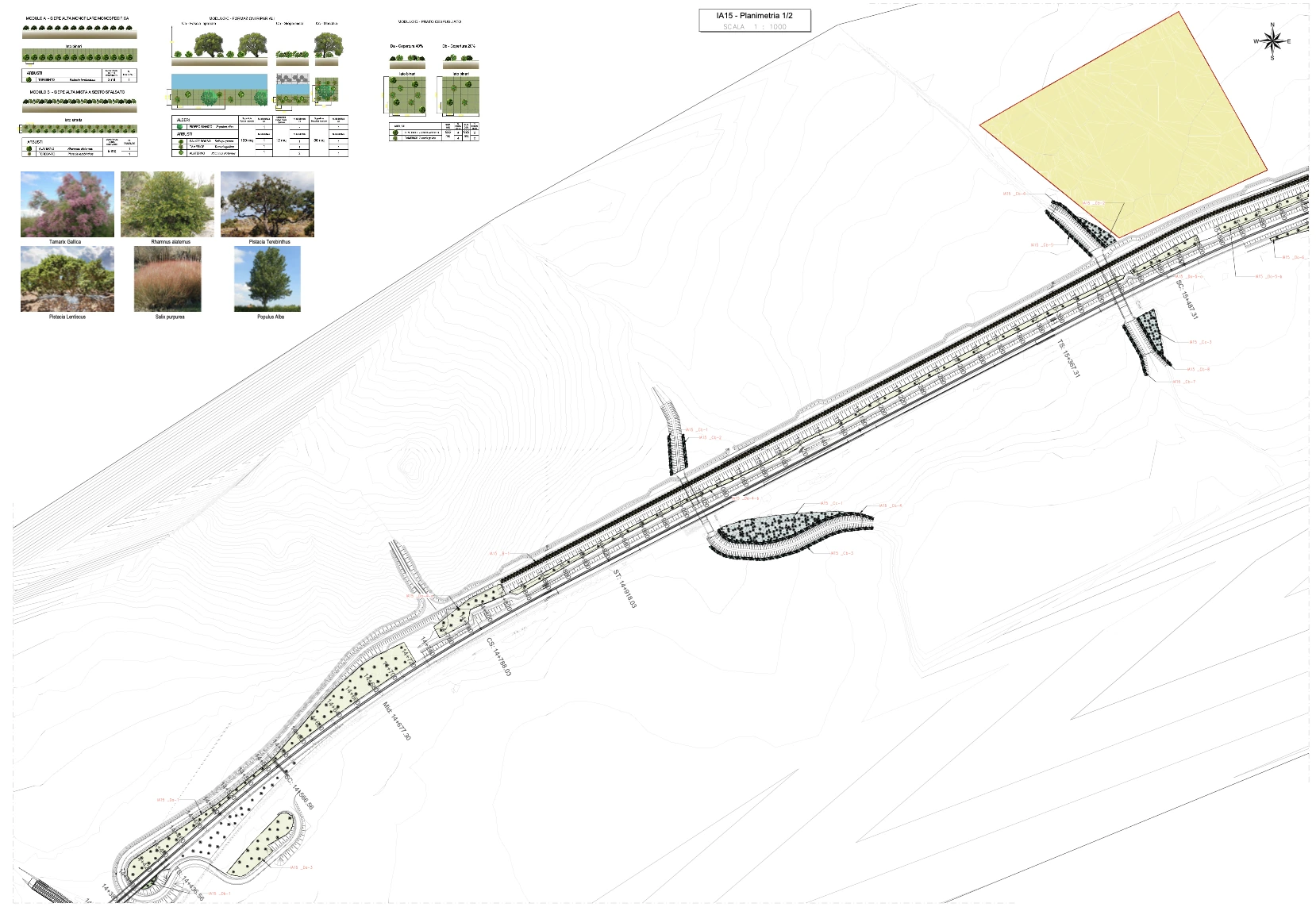
The Revit and Dynamo workflow turns changing DWG inputs into terrain models, green-area categories, tree placement, technical sheets, and IFC outputs for two LSB railway assignments covering 33 km and 19 km.
The assignments covered roughly 33 km around Venezia and 19 km in Sicily. At that scale, manual modeling and repeated sheet updates were not practical.
Dynamo routines reloaded changing discipline files, generated terrain floors and topography, placed floors on terrain, and kept the Revit geometry aligned with the source drawings.
The workflow placed the correct Revit tree families at the correct points, categorized green intervention areas, and linked planting modules and species to the technical sheets.
After the first corridor, the method was shared with other team members and adapted more quickly when the second railway assignment arrived.
Backstage
I was not solving one drawing. I was trying to keep changing DWGs, terrain categories, tree placement, and many sheets coordinated across kilometers of railway.
I built several Dynamo routines for reading DWGs, forming terrain and topography, placing model elements, assigning tree families, and supporting sheet generation.
Terrain surfaces, green areas, planting modules, species references, route divisions, title blocks, and IFC exports all had to tell the same technical story.
I developed the workflow while collaborating with LSB, then explained it to other team members so it could continue beyond one person and one corridor.
The useful part was not one automated result. It was a rule-based process that could absorb change and regenerate documentation across many kilometers.