Ten years, seven stations
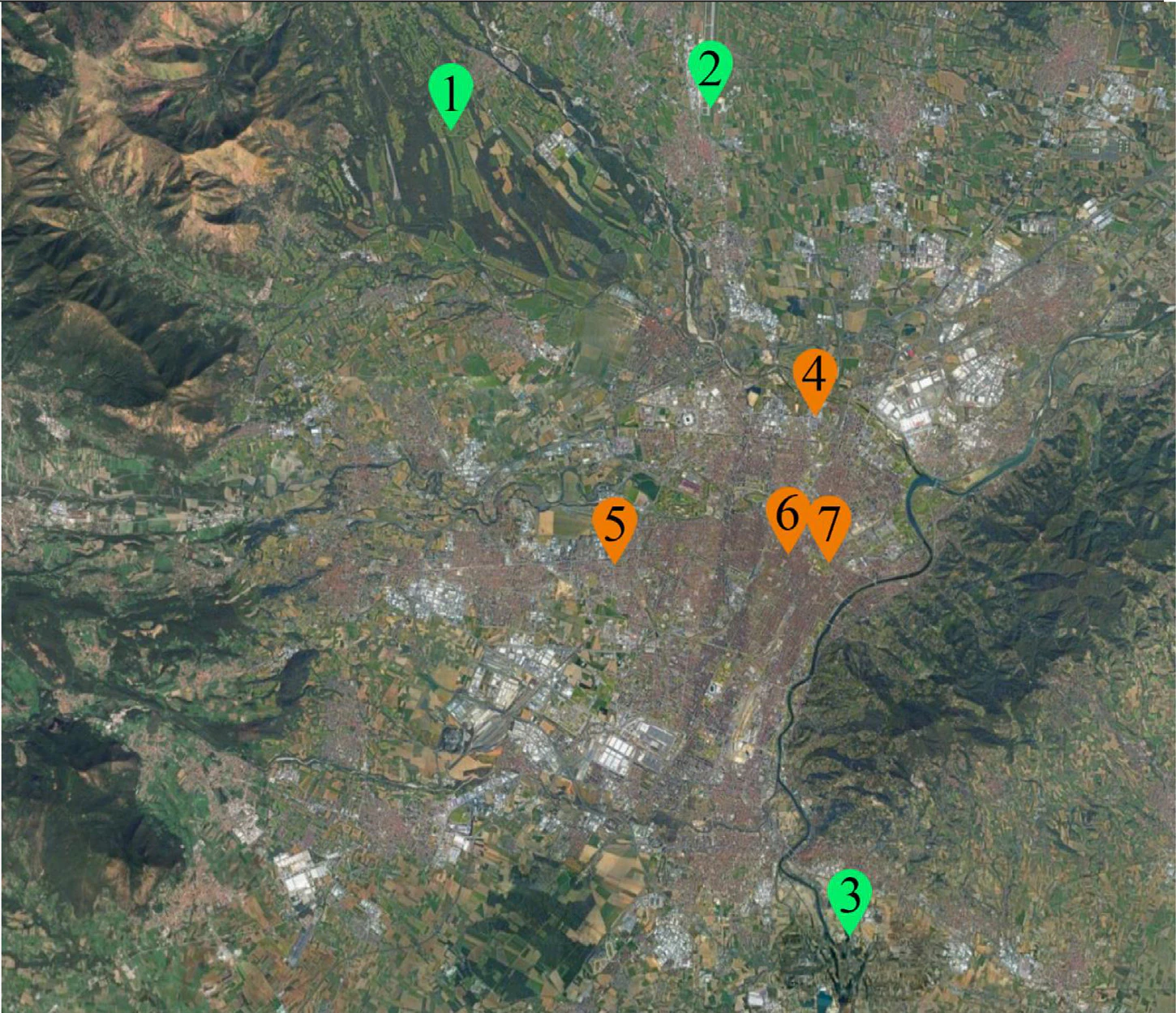
Ten years of local observations become seven EnergyPlus-compatible typical meteorological year files for different urban and suburban conditions.
Work
Research connecting local weather observations, open urban datasets, simulation-ready files, and city geometry to study how climate conditions vary across Torino.
Stage
The first public outcome is a Torino dataset with EPW files for seven stations, supported by an open publication and a city-model workflow for further urban-climate research.
Ten years of local observations become seven EnergyPlus-compatible typical meteorological year files for different urban and suburban conditions.
The Torino EPWs article and Zenodo dataset publish the method, limitations, and simulation-ready files for reuse.
A Grasshopper and Rhino workflow turns shapefile attributes into structured city geometry for future neighborhood-scale analysis.
Backstage
I connected measured records, cleaning rules, ISO typical-year methods, EPW generation, validation, and parametric city modeling, while keeping clear which methods belong to each outcome.
I used a traceable Python workflow to clean, complete, standardize, convert, and validate the fragmented observations.
I preserved several stations because one generic airport weather file cannot describe the variation within the city.
I turned spatial attributes into structured urban geometry for later microclimate and performance studies.